
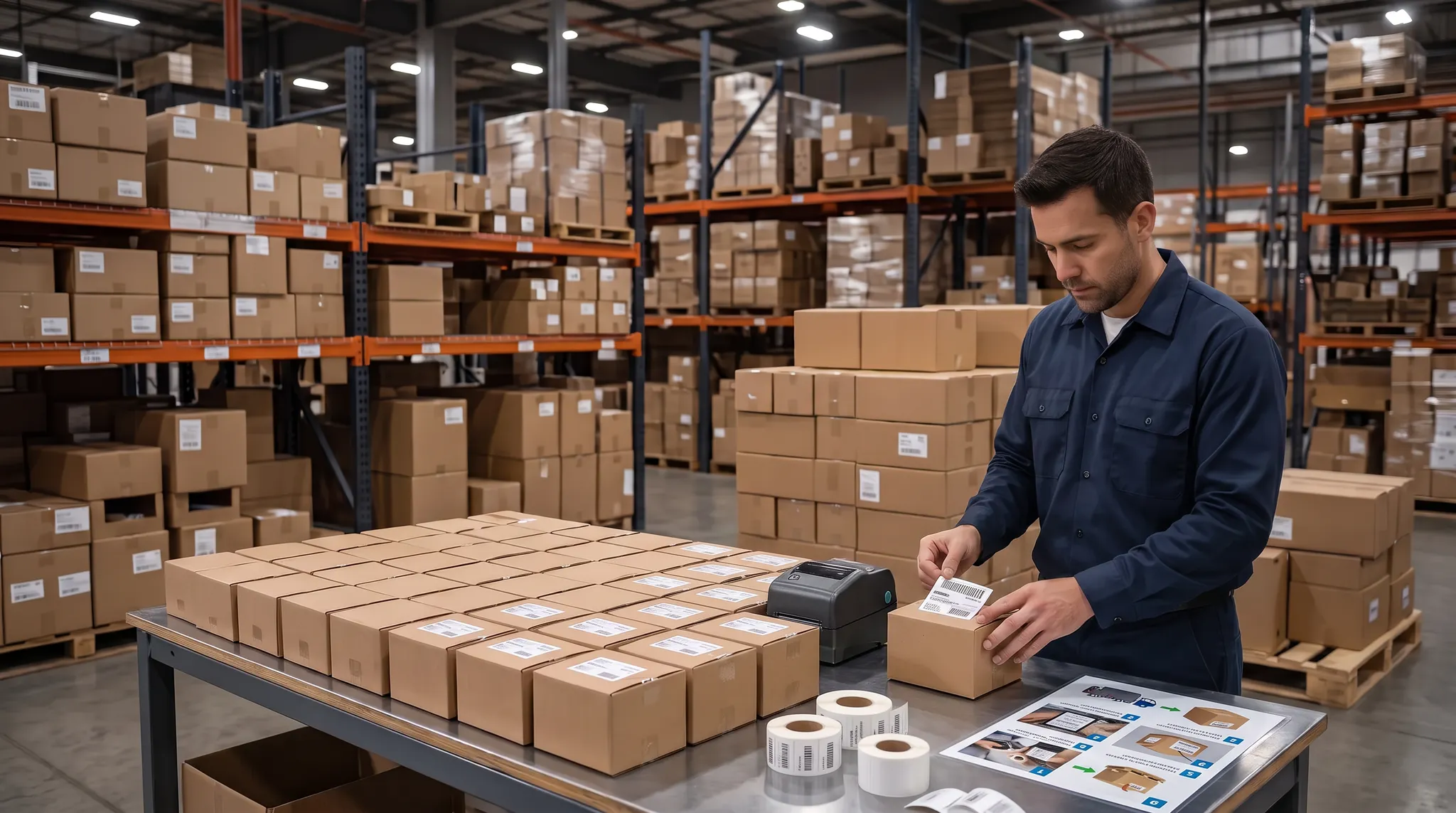
An Amazon FBA removal order moves inventory out of Amazon's fulfillment network. If you want the stock sent to your warehouse or a returns-processing partner, choose the return option and verify the receiving address before submitting. Receipt is only the first handoff. Count the units, document their condition, and approve what happens next before making them available for sale.
Amazon employee Angie_Amazon explains the return-versus-disposal choice in Amazon's removal-order guidance. Check the options and notices in your own Seller Central account; this guide does not set a universal removal deadline or delivery estimate.
Warehouse images illustrate inspection and prep work. They do not show Rocket Packaging's facility or staff.
Removal is not a resale approval
A customer return and an FBA removal order are different events. The first concerns a buyer's order. The second concerns stock leaving Amazon's network, including inventory you have decided to retrieve. Treat the removal record as a movement record, not proof that every received unit is ready to sell.
Amazon's condition guidelines say sellers should inspect products for signs of use before choosing a listing condition. Some categories have their own rules, and not every category allows every condition. A damaged box, missing accessory, or broken seal can require a different decision than a label problem.
Agree the inspection scope with the receiving partner in advance. A visual check is not the same as functional testing, repair, or certification. Specify which checks are required and which exceptions need your approval.
Before you create the removal order
Use this recommended handoff sequence alongside the current options in Seller Central:
- Review the inventory. Identify the SKUs and quantities you intend to retrieve. Save the available inventory status and removal notice so the warehouse knows what to expect.
- Confirm the destination. Ask the receiving partner to approve the address, contact details, accepted products, and receiving instructions before selecting it in Amazon.
- Choose the correct action. When physical receipt is the goal, select Return rather than Dispose. Review automated removal preferences separately so future inventory follows your intended route.
- Save the record. Keep the removal order ID, requested quantities, and destination. Share shipment and tracking information when it becomes available.
- Define the release rules. State who can approve re-prep, restocking, liquidation, or disposal. Keep uncertain units on hold rather than giving the warehouse a blanket resale instruction.
The return-address and removal-setting checks follow Amazon's employee guidance. The warehouse approval and documentation steps are recommended operating practices, not a claim that Amazon requires this exact checklist.
Build a receiving record
Give the warehouse a record it can update as stock arrives. Avoid treating the quantity requested for removal as the quantity physically received. Reconcile actual arrivals against the order and available shipment records, then investigate differences before closing the handoff. The 3PL inventory receiving checklist covers the same count-and-reconcile steps for supplier deliveries.
Recommended fields include:
- Removal order ID and any available tracking references.
- Seller SKU, ASIN, FNSKU, and product description where available.
- Quantity requested, quantity received, and quantity still unresolved.
- Observed packaging condition and product condition.
- Missing accessories, visible damage, and required follow-up checks.
- Photographs or exception notes linked to the affected unit or batch.
- Approved next action, approval date, and inventory location.
Keep unidentified stock separate until someone resolves its identity. A warehouse count mismatch does not by itself establish an Amazon reimbursement claim. Preserve the records, check the applicable policy in Seller Central, and use the appropriate support process if you need to dispute a discrepancy.
Inspect before releasing stock
Start with identity and completeness. Match the product to its records, check the packaging and seals, and confirm that the required parts and accessories are present. Record signs of use or damage instead of assuming the original listing condition still applies.
Use category-appropriate checks. For a product that needs functional testing, agree who performs it and what a pass means. Set aside items with unresolved safety, authenticity, expiry, or restriction concerns. A clean outer carton cannot settle those questions.
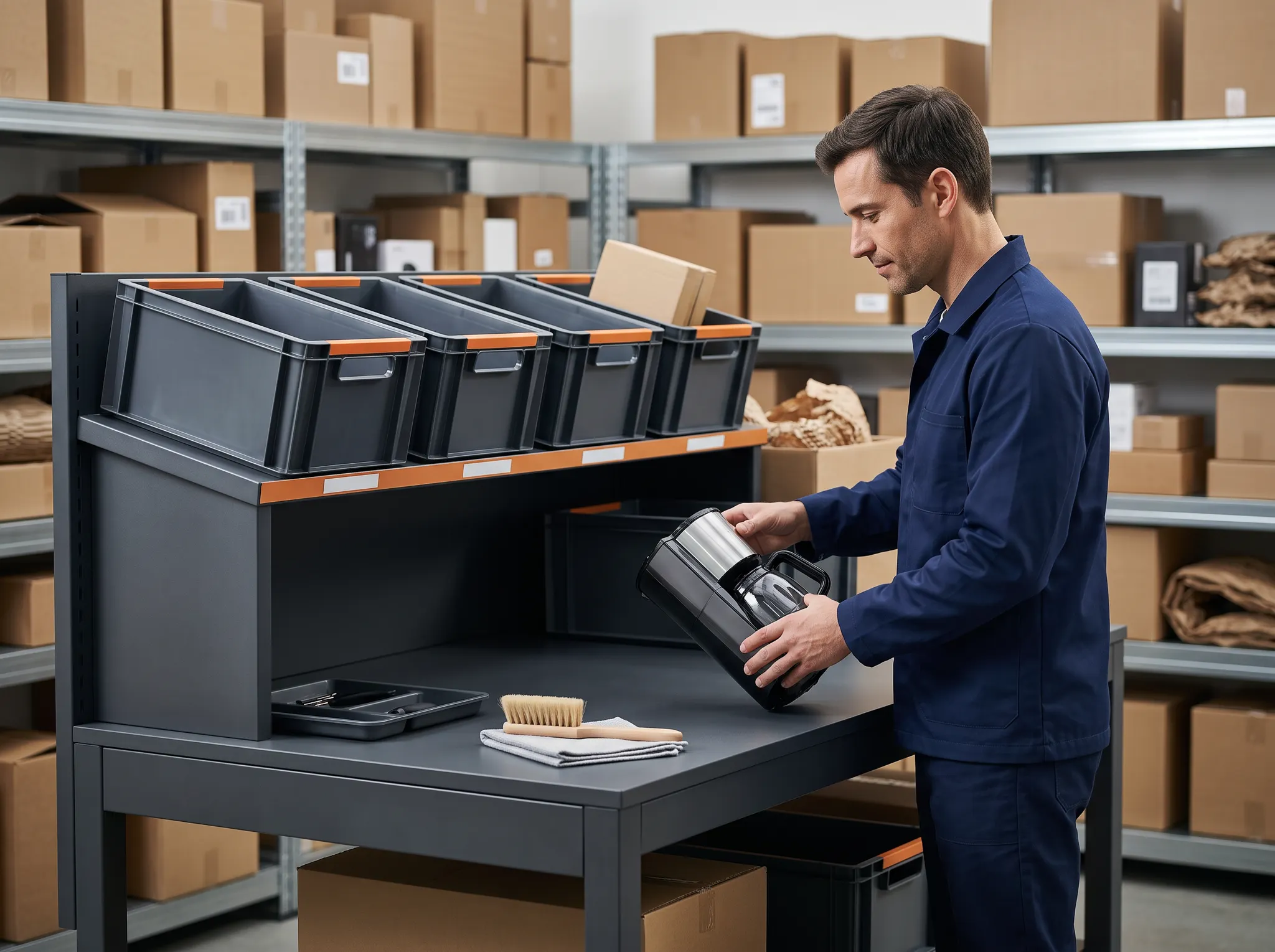
Illustrative returns-inspection scene, not Rocket Packaging's facility or staff.
Amazon's condition guide distinguishes New from Used and Open Box conditions and describes category-specific restrictions. Replacing a carton or applying a fresh label does not erase evidence of use. Do not describe a unit as New merely because it has been repackaged.

Approve the next action
Assign each inspected unit a documented next step. These are operating decisions, subject to the product's condition, marketplace rules, and your approval:
- Re-prep eligible stock. Correct packaging or labeling only after confirming the unit is suitable for its intended listing and destination. Use the FBA prep requirements checklist for the outbound preparation stage.
- Use a permitted resale condition. If a product qualifies for an allowed Used or Open Box condition, match the listing and inventory records to that condition. Check the category rules first.
- Hold an exception. Keep incomplete, unidentified, or disputed units out of available stock while the decision is unresolved.
- Choose another disposition. Review approved recovery, liquidation, or disposal options when normal resale is not appropriate. Do not assume a payout or recovery percentage.
Amazon's Grade and Resell program update describes an Amazon program for eligible customer-returned products sold as Used. That is distinct from an independent warehouse's inspection service. Check program eligibility and current account options before deciding which path fits.
Reconcile the full cost
Compare the expected value of the approved next use with all applicable costs. Include Amazon removal charges, receiving, inspection, packaging or labeling, storage, outbound shipping, and any disposal work. Request the scope and applicable fees before authorizing the warehouse project rather than relying on an old rate card.
Amazon's 2026 charge-timing announcement says removal and disposal fees for new orders created on or after March 1, 2026 are charged per unit as each unit is processed. Amazon describes this as a timing change, not a rate change. Review the shipment-level charges in Payments, Transaction view, alongside your receiving records.
Keep the inspection decision separate from the fulfillment decision. If recovered stock will serve merchant-fulfilled orders, review the FBA versus FBM guide before assigning inventory to that workflow.
Rocket Packaging returns
Rocket Packaging's Amazon FBA returns service covers receiving, inspection, condition grading, reconciliation, and eligible relabeling or repackaging under an agreed scope. Returned inventory can follow approved restocking or disposition paths; inspection is not a guarantee that it can be resold.
For a custom quote, share your expected unit volume, product categories, removal records, inspection requirements, and approval rules. Confirm the receiving address and project scope before directing inventory to the warehouse.
Clear answers
Frequently Asked Questions
What is an Amazon FBA removal order?
It is an instruction to move inventory out of Amazon's fulfillment network. When you want physical stock delivered to a recipient, review the Return option and verify the receiving address. Confirm the available options in your account. Amazon guidance.
Can I resell every unit returned through a removal order?
No. Inspect the unit and check its permitted category and listing condition before offering it for sale. Repackaging alone does not make a used product New. Amazon condition guidelines.
What should I send the receiving warehouse?
Share the removal order ID, available SKU and quantity records, approved destination, tracking when available, and written inspection and disposition instructions. These are recommended handoff practices; agree the exact receiving scope with the warehouse.
How long will an FBA removal order take?
Use the current status and guidance in Seller Central rather than a fixed estimate from this article. Separate Amazon's removal and delivery process from the receiving warehouse's inspection work, and confirm each handoff before setting a resale date.